
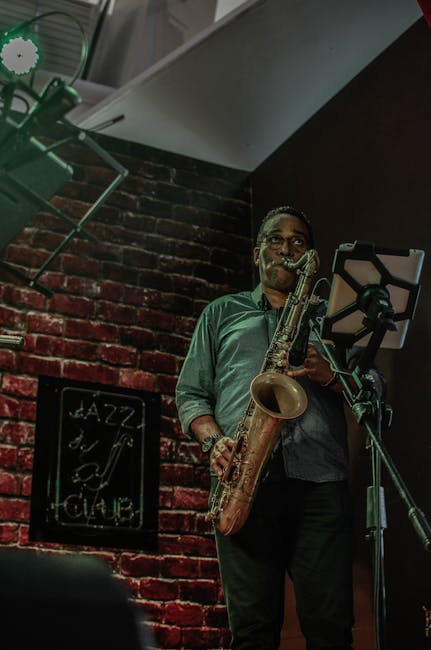
Ninety years ago, a former speakeasy at 178 Seventh Avenue South opened its doors under new management. Max Gordon, a Lithuanian immigrant with a passion for poetry and folk music, transformed the basement space into a showcase for emerging talent. He could not have imagined that his little club would become the most storied jazz venue in the world.
The Village Vanguard celebrates its 90th anniversary this month with a series of special performances that honor both its history and its continuing role as a laboratory for America’s most sophisticated art form.
“There is no other room like this one,” said pianist Brad Mehldau, who will perform as part of the anniversary series. “The acoustics, the intimacy, the ghosts. When you play the Vanguard, you are in conversation with everyone who played before you.”
That conversation includes the most consequential names in jazz history. John Coltrane recorded his landmark 1961 album here, its title simply “Live at the Village Vanguard.” Bill Evans captured some of his most celebrated work in the room. Sonny Rollins, Thelonious Monk, Charles Mingus, Keith Jarrett: the list of artists who defined their sound in this basement reads like a syllabus of jazz education.
The physical space has changed remarkably little since Gordon’s era. The room seats perhaps 120 people, with some of those seats offering obstructed views of the bandstand. The sound system remains simple. The walls still bear the residue of decades of cigarette smoke, despite the club having been smoke-free for years.
“We could have expanded, renovated, modernized,” said Lorraine Gordon, Max’s widow, who ran the club from his death in 1989 until her own passing in 2018. Her daughter, Deborah, now oversees operations. “But the room is the room. You do not fix what is already perfect.”
That perfection lies in the acoustics. The triangular shape of the basement creates natural amplification that allows acoustic instruments to project without heavy reinforcement. Musicians describe the room as forgiving and honest, revealing the nuances of their playing without artificial enhancement.
The anniversary programming reflects the Vanguard’s role as both museum and living institution. Legacy artists including Charles Lloyd and Jack DeJohnette will perform alongside rising stars like Immanuel Wilkins and Joel Ross. A Sunday afternoon concert will feature the Vanguard Jazz Orchestra, the big band that has held a Monday night residency since 1966.
“Mondays at the Vanguard are church,” said trombonist Michael Dease, who leads the orchestra. “We are playing arrangements that Thad Jones wrote 50 years ago, and they still sound brand new.”
The club’s survival through nine decades of economic upheaval, changing tastes, and neighborhood transformation reflects both careful stewardship and remarkable luck. The Gordons own their building outright, insulating them from the rent pressures that have shuttered countless other venues. A devoted audience continues to fill the room seven nights a week.
But survival has required adaptation. The Vanguard began livestreaming performances during the pandemic, reaching global audiences who might never visit New York. Archive recordings, some unreleased for decades, have found new listeners through streaming services.
“The business has changed completely,” Deborah Gordon acknowledged. “But the mission has not. We present the best jazz we can find, every night. That is what my parents did, and that is what we will keep doing.”
The anniversary celebrations culminate on December 31 with a New Year’s Eve concert featuring multiple sets and a midnight toast. Tickets sold out within hours of going on sale, confirming that appetite for live jazz remains robust among those who know where to find it.
For musicians, a Vanguard booking remains among the highest honors in jazz. The room demands preparation: there is nowhere to hide, no technology to compensate for weak playing. But for those ready to meet the challenge, the experience is transformative.
“The first time I played the Vanguard, I was terrified,” recalled saxophonist Melissa Aldana, who has since become a regular. “By the end of the first set, I understood why musicians dream of playing here. The room lifts you. The history holds you. You play better than you knew you could.”
As the anniversary celebrations continue through December, the Village Vanguard does what it has always done: presenting world-class music in a basement that somehow contains multitudes. Max Gordon, who died convinced that jazz was dying, would be astonished to see his club thriving 90 years later.
“He was always a pessimist,” Lorraine Gordon once said. “But he built something that will outlast all of us. That is the best kind of optimism there is.”