
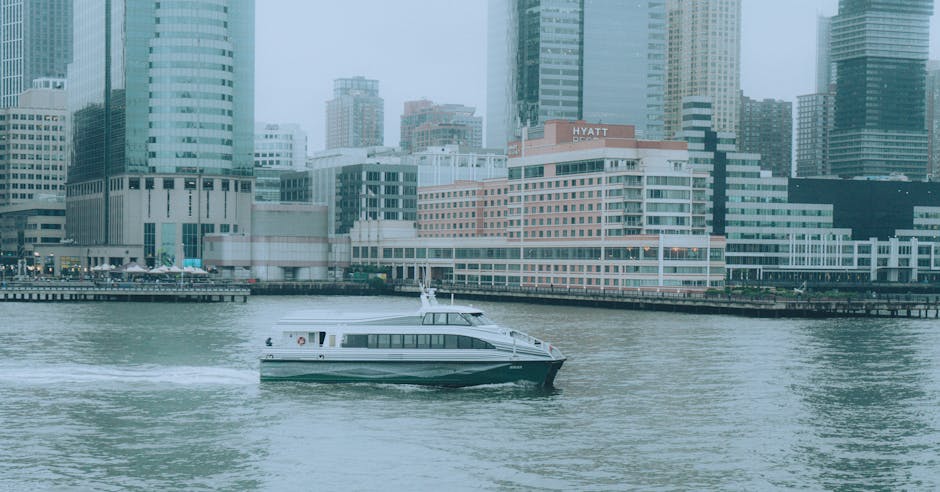
The 6:30 a.m. ferry from St. George to Whitehall is not glamorous. The passengers are mostly bleary-eyed commuters heading to Manhattan for the workday, clutching coffee and scrolling phones. The ride takes 25 minutes, repeated in reverse each evening, a quotidian journey that most riders long ago stopped noticing.
But on a cold January morning, something is different. The usual crew gathers at the wheelhouse door as Captain Angela DeSantis guides the ferry into the Whitehall terminal for the final time. After 40 years and more than 50,000 crossings, she is retiring.
“I told myself I would not get emotional,” DeSantis says later, her voice catching. “I lied to myself.”
DeSantis, 63, joined the Staten Island Ferry system in 1986, working her way up from deckhand to captain over two decades. She has navigated through blizzards, hurricanes, and the terrible morning of September 11, 2001, when she ferried emergency responders toward smoke that would burn for months.
“That day, I understood what this job really meant,” she says. “We were not just moving people. We were connecting New York. We were helping it survive.”
The Staten Island Ferry, which carries 22 million passengers annually across New York Harbor, operates as both essential transit and municipal icon. The views of the Statue of Liberty and the Manhattan skyline have made the free ride a tourist attraction, but for Staten Islanders, it is simply how you get to work.
DeSantis knows both dimensions intimately. She grew up in Stapleton, taking the ferry with her father on childhood trips to the city. When she returned to Staten Island after college, working on the boats seemed natural.
“My father was a longshoreman,” she says. “The water is in my blood.”
Women captains were rare when DeSantis earned her license in 1998. She was the fifth woman to captain a Staten Island Ferry, joining a service that had been almost exclusively male for its 119-year history.
“Some of the old-timers did not know what to make of me,” she recalls. “One guy asked if I knew how to read a compass. I told him I could read him like a book: nervous about a woman taking his job.”
DeSantis earned respect through competence and calm. Ferry captains face challenging conditions: strong currents in the harbor, weather that can shift rapidly, and the constant pressure of keeping to schedule while carrying thousands of passengers.
Her record is spotless. No serious incidents, no injuries to passengers or crew, no federal safety violations. In a profession where errors make headlines, DeSantis achieved the distinction of consistent excellence.
“The best captains are the ones you never hear about,” says Michael Stapleton, director of ferry operations. “Angela brought the boat in safely every single time. That is what matters.”
Among regular commuters, DeSantis became known for small gestures: recognizing familiar faces, announcing landmarks for tourists, making the 25-minute journey feel personal rather than mechanical.
Marcus Chen, who has commuted via ferry for 15 years, recalls her reassurance during a particularly rough crossing.
“The boat was rocking hard, people were scared,” he says. “The captain came on the intercom and said something like, ‘The harbor is feeling feisty today, but we have got this.’ Just her voice made everyone relax.”
DeSantis deflects praise for such moments, attributing them to the training all captains receive.
“We are public servants,” she says. “The passengers trust us with their safety. The least we can do is make them feel cared for.”
Her retirement plans are modest: time with her grandchildren, a trip to Alaska she has been postponing for years, maybe some fishing. After decades of 4 a.m. wake-up calls and shift work, she looks forward to sleeping in.
But leaving the water will not be easy. The harbor has been her constant companion since childhood, its moods and rhythms as familiar as her own heartbeat.
“People ask if I will miss it,” she says, watching a ferry depart without her. “It is like asking if I will miss breathing. Of course I will. But there is a time for everything.”
The Department of Transportation honored DeSantis at a ceremony last week, presenting her with a commendation from the mayor and a model of the John J. Marchi, the ferry she captained most frequently. Her crewmates pooled funds for a custom captain’s wheel bearing her name.
As the retirement party wound down, DeSantis slipped away to the wheelhouse one last time. She stood at the helm where she had stood thousands of times, looking out at the harbor she has loved for 40 years.
Then she walked off the boat and did not look back.
“I did my job,” she says simply. “Now it is someone else’s turn.”