
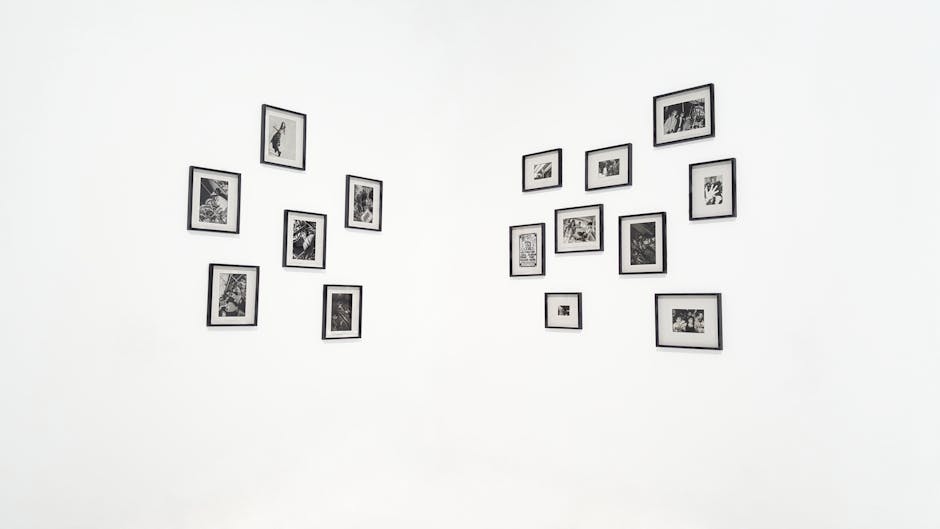
The Whitney Museum of American Art opened its most controversial exhibition in years this week, a sprawling survey of artificial intelligence in visual art that has already provoked protests, passionate defenses, and fundamental questions about what art means in the age of machines.
“Synthetic Visions: Art in the Age of AI” occupies the museum’s entire fifth floor, presenting more than 100 works created with or about artificial intelligence. The show ranges from early experiments by pioneering digital artists to recent pieces made with sophisticated image generators that have convulsed the art world.
“We knew this would be provocative,” said chief curator Donna De Salvo. “But museums exist to engage with the most important questions of our moment. Right now, AI raises questions that every artist, and every person, needs to confront.”
Those questions erupted visibly outside the museum on opening day, where a group of artists protested what they called the institution’s endorsement of “art theft machines.” Many AI image generators trained on vast datasets of existing artwork, often without permission from or compensation to the original artists.
“This is not art,” said painter Sarah Michaels, one of the protest organizers. “This is laundered plagiarism. The Whitney is legitimizing tools that steal from working artists.”
The exhibition addresses these concerns directly, dedicating an entire gallery to the ethics and economics of AI image generation. Text panels acknowledge the copyright controversies and include statements from artists on both sides of the debate.
But the show’s core argument is that AI art deserves serious consideration regardless of its origins. Curators have assembled works that they contend demonstrate genuine creativity, even when that creativity involves machines.
Among the most striking pieces is “The Garden of Forking Paths” by collective Obvious, which uses a generative adversarial network to produce landscapes that blend elements from thousands of historical paintings. The result is eerily beautiful: scenes that feel familiar yet impossible, as if glimpsed in a dream.
“What you see is not any single painting,” explained Pierre Fautrel, one of the collective’s members, during a gallery talk. “It is the statistical essence of how humans have depicted nature for centuries. That is something a human alone could never create.”
Critics have pushed back vigorously. Art historian Claire Bishop, writing in Artforum, called the exhibition “a surrender to technological determinism that mistakes novelty for significance.”
“Plenty of things are novel,” Bishop wrote. “That does not make them art. Art requires intention, meaning, and human engagement with form. Algorithms have none of these things.”
The debate extends beyond aesthetic theory to practical concerns about artists’ livelihoods. Illustration work has declined significantly as companies turn to AI generators for images that once required human labor. Many working artists view AI not as a creative partner but as an existential threat.
The exhibition includes a section on these disruptions, presenting data on job losses and interviews with affected artists. The approach has been criticized as insufficient by some protesters, who argue that the museum cannot adequately address the harm while simultaneously celebrating the technology.
For visitors willing to engage on the exhibition’s terms, the works themselves offer much to consider. Refik Anadol’s immersive installations transform data into flowing visual environments. Holly Herndon’s “Spawn” explores AI-generated music and its uncanny resonance with human emotion. Ian Cheng’s simulations create digital ecosystems that evolve unpredictably.
Whether these constitute art in any traditional sense remains genuinely uncertain. The exhibition wisely avoids definitive answers, instead presenting the question itself as the subject.
“We are at a hinge point in cultural history,” De Salvo said. “The decisions we make now about AI and creativity will shape generations. The Whitney’s role is not to tell people what to think, but to create space for thinking.”
That space is likely to remain contested. Additional protests are planned for the coming weeks, while the museum has scheduled panel discussions and debates throughout the exhibition’s run.
For now, visitors file through galleries that feel charged with uncertainty. Some linger before pieces that clearly move them, regardless of origin. Others hurry past, visibly uncomfortable with what they are seeing.
At the exhibition’s exit, a single text panel poses the question that hangs over the entire show: “What do we lose, and what do we gain, when machines learn to create?”
No answer is provided. The blank wall below the question invites visitors to fill the space themselves.
“Synthetic Visions: Art in the Age of AI” runs through May 15, 2026. Admission is free for New York City residents on Friday evenings.