
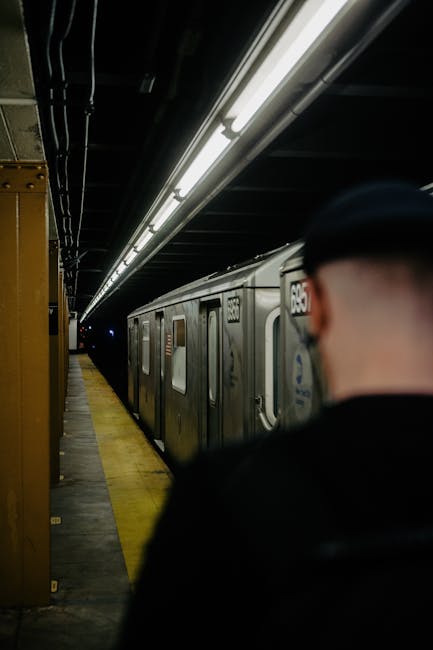
The Metropolitan Transportation Authority has released detailed service plans for Thanksgiving week, outlining subway and bus modifications that will affect millions of travelers from Wednesday evening through Sunday.
The changes reflect the agency’s effort to balance reduced ridership on Thanksgiving Day itself with higher-than-usual volumes on the days before and after, as families travel to gatherings across the region.
“Thanksgiving week is one of our most challenging periods,” said MTA Chief Operating Officer Demetrius Crichlow. “We are adding service where we expect crowds and reducing it where ridership typically drops, while also continuing essential maintenance work.”
The A and C lines will operate on a modified schedule throughout the holiday weekend, with trains running every 12 minutes instead of the typical 8 minutes during off-peak hours. The agency cited ongoing signal work between 59th Street and 125th Street that requires reduced speeds through the work zone.
More significant disruptions will affect the L train, which will suspend service between Bedford Avenue and Broadway Junction from Thursday morning through early Monday. Shuttle buses will replace train service, adding approximately 15 minutes to typical travel times.
“We know the L is a lifeline for many Brooklyn residents,” Crichlow acknowledged. “But this maintenance window allows us to complete critical track work that would otherwise require multiple shorter closures.”
For commuters heading to Thanksgiving gatherings, the Metro-North Railroad and Long Island Rail Road will operate on holiday schedules Thursday, with reduced frequency compared to typical weekdays. Both railroads will add extra trains Wednesday evening and Sunday afternoon to accommodate travelers.
The LIRR’s Oyster Bay branch will see particular attention, with additional trains serving communities along the North Shore where large family gatherings are common. Metro-North is adding service to stations in Westchester and Rockland counties for similar reasons.
Penn Station typically experiences its highest volumes of the year during Thanksgiving week. Amtrak officials have recommended arriving at least 45 minutes before departure for Northeast Corridor trains, and earlier for longer routes.
“Delays at Penn Station cascade through the entire network,” said an Amtrak spokesperson. “Arriving early helps everyone.”
For the Thanksgiving Day Parade, the MTA will deploy additional subway service on routes connecting to the Upper West Side, where the parade begins. The B, C, and 1 trains will operate with increased frequency Thursday morning, with service returning to normal by early afternoon.
Bus routes in Manhattan will face significant detours during the parade, with diversions affecting crosstown service from 77th Street to 34th Street between 6 a.m. and 1 p.m. The agency has posted detailed detour maps on its website and mobile app.
Airport travelers face their own considerations. The AirTrain to JFK will operate on a normal schedule throughout the holiday, but roads to both JFK and LaGuardia are expected to experience severe congestion Wednesday and Sunday.
The MTA recommends travelers to JFK allow at least three hours for the journey from Manhattan on peak travel days. LaGuardia, served only by buses, requires similar planning.
For those choosing to drive, the Port Authority has announced increased staffing at Hudson River crossings to manage anticipated congestion. The George Washington Bridge typically experiences its longest delays of the year on Thanksgiving eve, with backups sometimes extending several miles.
Congestion pricing, which took effect earlier this year, will remain active throughout the holiday period, including Thanksgiving Day. The $15 toll for vehicles entering Manhattan below 60th Street applies 24 hours a day.
Transit advocates noted that the holiday period highlights both the system’s essential role and its vulnerabilities.
“Millions of people depend on this network to reach family, to get to work, to live their lives,” said Nick Sifuentes of the Riders Alliance. “The MTA needs sustained investment to serve them reliably.”
The agency projects serving approximately 4.5 million riders on the subway system during the Thanksgiving period, down from typical weekly volumes but still representing one of the largest coordinated transit operations in the country.
Real-time service updates will be available through the MTA app and the agency’s social media accounts. Riders are encouraged to check service status before beginning their journeys.